Prelude to the Easter Rising of 1916

Prelude to the Easter Rising of 1916
The Signatories of the Proclamation

Search This Blog

Saturday, January 12, 2013

The Sixteenth Dáil

This is a list of the members who were elected to the 16th Dáil Éireann, the lower house of the Oireachtas (legislature) of Ireland. These TDs (Members of Parliament) were elected at the 1957 general election on 5 March 1957 and met on 20 March 1957. The 16th Dáil was dissolved by President Éamon de Valera, at the request of the Taoiseach Seán Lemass on 8 September 1961. The 16th Dáil lasted 1,674 days, and saw a change of Taoiseach from Éamon de Valera to Seán Lemass.

The list of the 147 TDs elected, is given in alphabetical order by constituency.
Members of the 16th Dáil
ConstituencyNameParty
Carlow–KilkennyPatrick CrottyFine Gael
Jim GibbonsFianna Fáil
Joseph HughesFine Gael
Francis HumphreysFianna Fáil
Martin MedlarFianna Fáil
CavanPatrick O'ReillyFine Gael
Michael SheridanFianna Fáil
Paddy SmithFianna Fáil
John TullyClann na Poblachta
ClareÉamon de ValeraFianna Fáil
Patrick HilleryFianna Fáil
Patrick HoganCeann Comhairle
William MurphyFine Gael
Cork BoroughStephen BarrettFine Gael
Seán CaseyLabour Party
John GalvinFianna Fáil
Gus HealyFianna Fáil
Jack LynchFianna Fáil
Cork EastRichard BarryFine Gael
Martin CorryFianna Fáil
John MoherFianna Fáil
Cork NorthBatt DoneganFianna Fáil
Patrick McAuliffeLabour Party
Denis O'SullivanFine Gael
Cork SouthDan DesmondLabour Party
Seán McCarthyFianna Fáil
Tadhg ManleyFine Gael
Cork WestEdward CotterFianna Fáil
Michael MurphyLabour Party
Florence WycherleyIndependent
Donegal EastNeil BlaneyFianna Fáil
Liam CunninghamFianna Fáil
Daniel McMenaminFine Gael
William SheldonIndependent
Donegal WestJoseph BrennanFianna Fáil
Cormac BreslinFianna Fáil
Patrick O'DonnellFine Gael
Dublin CountyKevin BolandFianna Fáil
Patrick BurkeFianna Fáil
Éamon RooneyFine Gael
Dublin North–CentralVivion de ValeraFianna Fáil
Colm GallagherFianna Fáil
Patrick McGilliganFine Gael
Dublin North–EastJack BeltonFine Gael
Patrick ByrneFine Gael
Charles HaugheyFianna Fáil
Denis LarkinLabour Party
Oscar TraynorFianna Fáil
Dublin North–WestThomas ByrneIndependent
Declan CostelloFine Gael
Richard GoganFianna Fáil
Dublin South–CentralPhilip BradyFianna Fáil
Maurice E. DockrellFine Gael
Seán LemassFianna Fáil
Celia LynchFianna Fáil
Jack MurphyIndependent
Dublin South–EastNoël BrowneIndependent
John A. CostelloFine Gael
Seán MacEnteeFianna Fáil
Dublin South–WestRobert BriscoeFianna Fáil
Bernard ButlerFianna Fáil
James CarrollIndependent
Noel Lemass, JnrFianna Fáil
Michael O'HigginsFine Gael
Dún Laoghaire and RathdownLionel BoothFianna Fáil
Seán BradyFianna Fáil
Liam CosgraveFine Gael
Galway NorthMichael DonnellanClann na Talmhan
Mark Killilea, SnrFianna Fáil
Michael F. KittFianna Fáil
Galway SouthPatrick BeeganFianna Fáil
Michael CartyFianna Fáil
Brigid HoganFine Gael
Galway WestGerald BartleyFianna Fáil
Fintan CooganFine Gael
Johnny GeogheganFianna Fáil
Kerry NorthPatrick FinucaneIndependent
Tom McEllistrimFianna Fáil
Daniel MoloneyFianna Fáil
Dan SpringLabour Party
Kerry SouthHonor CrowleyFianna Fáil
Patrick PalmerFine Gael
John Joe RiceSinn Féin
KildarePatrick DooleyFianna Fáil
William NortonLabour Party
Gerard SweetmanFine Gael
Leix–OffalyKieran EganFianna Fáil
Nicholas EganFianna Fáil
Oliver J. FlanaganFine Gael
Peadar MaherFianna Fáil
Tom O'HigginsFine Gael
Limerick EastJohn CarewFine Gael
Paddy ClohessyFianna Fáil
Donogh O'MalleyFianna Fáil
Ted RussellIndependent
Limerick WestJames CollinsFianna Fáil
Denis JonesFine Gael
Donnchadh Ó BriainFianna Fáil
Longford–WestmeathErskine H. ChildersFianna Fáil
Charles FaganFine Gael
Michael KennedyFianna Fáil
Seán Mac EoinFine Gael
Ruairí Ó BrádaighSinn Féin
LouthFrank AikenFianna Fáil
George CoburnFine Gael
Pádraig FaulknerFianna Fáil
Mayo NorthPhelim CallearyFianna Fáil
Seán DohertyFianna Fáil
Patrick LindsayFine Gael
Mayo SouthJoseph BlowickClann na Talmhan
Seán FlanaganFianna Fáil
Henry KennyFine Gael
Micheál Ó MóráinFianna Fáil
MeathPatrick GilesFine Gael
James GriffinFianna Fáil
Michael HilliardFianna Fáil
MonaghanJames DillonFine Gael
Patrick MooneyFianna Fáil
Eighneachán Ó hAnnluainSinn Féin
RoscommonJohn Beirne, JnrClann na Talmhan
James BurkeFine Gael
Gerald BolandFianna Fáil
Jack McQuillanIndependent
Sligo–LeitrimStephen FlynnFianna Fáil
Eugene GilbrideFianna Fáil
John Joe McGirlSinn Féin
Mary ReynoldsFine Gael
Patrick RogersFine Gael
Tipperary NorthJohn FanningFianna Fáil
Mary RyanFianna Fáil
Patrick TierneyLabour Party
Tipperary SouthDan BreenFianna Fáil
Michael DavernFianna Fáil
Frank LoughmanFianna Fáil
Richard MulcahyFine Gael
WaterfordWilliam KenneallyFianna Fáil
Thomas KyneLabour Party
Thaddeus LynchFine Gael
John OrmondeFianna Fáil
WexfordDenis AllenFianna Fáil
Seán BrowneFianna Fáil
Brendan CorishLabour Party
Anthony EsmondeFine Gael
James RyanFianna Fáil
WicklowPaudge BrennanFianna Fáil
James EverettLabour Party
James O'TooleFianna Fáil


DateConstituencyGainLossNote
14 November 1957Dublin North–CentralIndependentFianna FáilFrank Sherwin (Ind) wins the seat vacated by the death of Colm Gallagher (FF)
16 May 1958Dublin South–EastNational Progressive DemocratsIndependentNoël Browne (Ind) co-founds the National Progressive Democrats
16 May 1958RoscommonNational Progressive DemocratsIndependentJack McQuillan (Ind) co-founds the National Progressive Democrats
30 May 1958Galway SouthFianna FáilFianna FáilAnthony Millar (FF) holds the seat vacated by the death of Patrick Beegan (FF)
25 June 1958Dublin South–CentralFianna FáilIndependentPatrick Cummins (FF) wins the seat vacated by the resignation of Jack Murphy (Ind)
22 July 1959ClareFianna FáilFianna FáilSeán Ó Ceallaigh (FF) holds the seat vacated by Éamon de Valera (FF) on his election as President
22 July 1959Dublin South–WestFine GaelFianna FáilRichie Ryan (FG) wins the seat vacated by the death of Bernard Butler (FF)
22 July 1959MeathFianna FáilFianna FáilHenry Johnston (FF) holds the seat vacated by the death of James Griffin (FF)
23 June 1960Carlow–KilkennyFianna FáilFine GaelPatrick Teehan (FF) wins the seat vacated by the death of Joseph Hughes (FG)
1 March 1960Sligo–LeitrimFine GaelFianna FáilJoseph McLoughlin (FG) wins the seat vacated by the death of Stephen Flynn (FF)

Irish Farmers' Association

The Irish Farmers' Association (IFA) is a national organisation to represent the interests of all sectors of farming in Ireland. It was founded in January 1955 as the National Farmers Association (NFA), aiming to lead Irish farmers out of the depression and deprivation which had dominated rural Ireland for decades.

The NFA merged in the 1960s with four smaller organisations representing specific sectors (including Leinster Milk Producers (now Fresh Milk Producers), beet growers and horticulture) to form the Irish Farmers Association – the IFA.

In the 1972 referendum on Irish membership of the European Economic Community, the IFA campaigned for a "yes" vote, seeking access to European markets and higher prices for agricultural produce.

The IFA's head office is at the Irish Farm Centre, in Bluebell, Dublin. It also maintains 12 regional offices and an office in Brussels.

Capital Punishment in Ireland

Capital punishment has been abolished in the Republic of Ireland. The last execution was in 1954, of Michael Manning for the rape and murder of Catherine Cooper, a nurse. From then until 1990 while capital punishment remained on the statute book, a practice arose whereby every sentence of death was commuted by the Irish president. The death penalty was abolished in law in 1990, and has been specifically prohibited by the Constitution of Ireland since 2002. The constitution provides that the penalty cannot be reintroduced even in war or a state of emergency. Capital punishment is also forbidden by several human rights treaties to which the state is a party.

Early Irish law discouraged capital punishment. Murder was usually punished with two types of fine: a fixed éraic and a variable Log nEnech; killing the murderer was done only where he or his relatives could not pay the fine. The execution of the murderer of Saint Odran, the charioteer of Saint Patrick, has been interpreted as a failed attempt to replace pagan restorative justice with Christian retributive justice.
After the Norman conquest of Ireland, English law provided the model for Irish law. This originally mandated a death sentence for any felony, a class of crimes established by common law but extended by various Acts of Parliament. Reforms passed from 1827 to 1861 allowed judges to sentence to transportation, and later penal servitude, for many hitherto capital crimes. The Capital Punishment (Ireland) Act 1842 brought the law in Ireland closer to that of England by reducing the penalty for numerous offences, and abolishing the capital crime of serving in the army or navy of France. The last public hanging in Ireland was in 1868; after the Capital Punishment Amendment Act 1868 executions were confined to behind prison walls. Irish doctor Samuel Haughton developed the humane "Standard Drop" method of hanging that came into use in 1866. The last peacetime execution under the United Kingdom of Great Britain and Ireland was of William Scanlan in 1911 for murdering his wife.

Execution of Irish republicans created political martyrs, such as the "Manchester Martyrs" of 1867. The Prevention of Crime (Ireland) Act, 1882, was enacted during the Land War and introduced on the day of the funeral of Lord Frederick Cavendish, one of the Phoenix Park murder victims. This empowered non-jury trials to impose death sentences, prompting Francis Alexander Fitzgerald to resign in protest as baron of the exchequer. In fact no death sentence was handed down under the act's provision. In 1916, the execution of the Easter Rising leaders turned public sympathy in favour of the rebels. 24 rebels were executed during the 1919–21 War of Independence, starting with Kevin Barry. In Munster, which was under martial law, 13 were shot in Cork and one in Limerick. "The Forgotten Ten" were hanged in Mountjoy Prison, which helped turn opinion in Dublin against the Dublin Castle administration. The last United Kingdom execution was of William Mitchell, an RIC constable who had murdered a justice of the peace.

Although the self-proclaimed Irish Republic, which fought the 1919–21 War against the British authorities, established its own Republican Courts, these were not empowered to impose death sentences. However, the Irish Republican Army was empowered by the Republic's Dáil to court-martial and execute pro-Unionist civilians for such crimes as 'spying' and collaboration. The procedures at such trials depended on the local IRA leadership; many were kangaroo courts imposing summary justice. Besides executions, IRA members also carried out combat operations, assassinations, extra-judicial killings, and personally-motivated murders, with varying levels of sanction from the Republican leadership; the dividing lines between these categories can be blurred and contentious; a case in point being the 1922 Dunmanway killings.

The draft version of the 1922 Constitution of the Irish Free State included a ban on capital punishment, but the Dáil did not adopt this, so the relevant British laws continued in force. This was done because of the outbreak of the 1922–3 Civil War; further, a resolution of the Third Dáil on 26 September 1922 authorised military tribunals to impose death sentences on the anti-Treaty forces. During the war the Free State government executed 81 captured anti-Treaty fighters by firing squad, as well as ordering extra-judicial killings.
Between November 1923 and April 1954, there were a total of 35 executions in the state. In the 1920s, execution was relatively common for murderers. As had happened before independence, the British executioner came to Mountjoy to perform hangings. An Irishman sent to Britain as apprentice to Albert Pierrepoint was deemed to lack "the character to be an executioner".

The only woman executed after independence was Annie Walsh in 1925. She and her nephew blamed each other for the murder of her elderly husband. The press expected only the nephew to be found guilty, but both were. She was hanged aged 31 in spite of the jury recommending clemency.

During the state of emergency in World War II, increased IRA activity led to six executions.

Charlie Kerins was hanged, while five were shot by firing squad after sentence by military tribunals under Emergency legislation. Of these, Maurice O' Neill and Richard Goss had shot but not killed Gardaí: the only people executed by the state for a non-murder crime.

Michael Manning was the last person executed in the state. He was hanged by Albert Pierrepoint for murder on 20 April 1954.

In response to fears about renewed republican violence, Cumann na nGaedheal governments passed the Public Safety Act, 1927 and later the Constitution (Amendment No. 17) Act, 1931. Each provided for a special military tribunal during a state of emergency. The 1927 Act required the tribunal to pass death sentences for treason and murder, and permitted it to do so for unlawful possession of firearms; no appeal would be permitted. The 1931 Act empowered the tribunal to try a variety of crimes and impose a greater sentence than usual, including death, if "in the opinion of the Tribunal such greater punishment is necessary or expedient". This provision was condemned by the Fianna Fáil opposition (which came to power in 1932) and was never invoked.

Fianna Fáil introduced a new Constitution in 1937, which contained several references to execution:
Article 13 section 6
 
The right of pardon and the power to commute or remit punishment imposed by any court exercising criminal jurisdiction are hereby vested in the President, but such power of commutation or remission may, except in capital cases, also be conferred by law on other authorities.
 
Article 40 section 4
Subsection 5
 
Where an order is made under this section by the High Court or a judge thereof for the production of the body of a person who is under sentence of death, the High Court or such judge thereof shall further order that the execution of the said sentence of death shall be deferred until after the body of such person has been produced before the High Court and the lawfulness of his detention has been determined and if, after such deferment, the detention of such person is determined to be lawful, the High Court shall appoint a day for the execution of the said sentence of death and that sentence shall have effect with the substitution of the day so appointed for the day originally fixed for the execution thereof.
 
Subsection 6
Nothing in this section, however, shall be invoked to prohibit, control, or interfere with any act of the Defence Forces during the existence of a state of war or armed rebellion.
Infanticide was made a separate crime from murder in 1949. For some years prior to this, death sentences for murder in such cases had always been commuted; the new act was intended "to eliminate all the terrible ritual of the black cap and the solemn words of the judge pronouncing sentence of death in those cases ... where it is clear to the Court and to everybody, except perhaps the unfortunate accused, that the sentence will never be carried out."

The Criminal Justice Act, 1951 explicitly excluded capital cases from those to which the Government was granted the power to commute sentences. Under Article 13.6 of the Constitution, the President's prerogative of mercy is not restricted.

Successive Ministers for Justice were asked in the Dáil about abolishing the death penalty: in 1936 by Frank MacDermot; in 1939 by Jeremiah Hurley; in 1948 by James Larkin, Jnr and Peadar Cowan; in 1956 by Thomas Finlay; in 1960 by Frank Sherwin; in 1962 by Stephen Coughlan. In each case the relevant minister dismissed the suggestion. Seán MacBride expressed personal support for abolition even while a minister in a government that oversaw the 1948 execution of Michael Gambon.

When Seán Brady asked in February 1963, minister Charles Haughey announced "that the death penalty for murder generally will be abolished but it will be retained for certain specific types of murder." The Criminal Justice Act 1964 abolished the death penalty for piracy, some military crimes, and most murders. It continued to be available for:
  • treason —under Article 39 of the Constitution, "treason shall consist only in levying war against the State, or assisting any State or person or inciting or conspiring with any person to levy war against the State, or attempting by force of arms or other violent means to overthrow the organs of government established by the Constitution, or taking part or being concerned in or inciting or conspiring with any person to make or to take part or be concerned in any such attempt."
  • offences under military law, relating to
    • neglect of command
    • assisting the enemy
    • passivity as a prisoner of war
    • mutiny
  • "capital murder", i.e.
    • of an on-duty Garda or prison officer; or
    • for a political motive, of a foreign head of state, diplomat, or government member; or
    • in the course or furtherance of certain offences under the Offences against the State Act 1939:
      • Usurpation of functions of government
      • Obstruction of government
      • Obstruction of the President
      • Interference with military or other employees of the State
The Extradition Act, 1965 prevented extradition where the prisoner could be sentenced to death for a crime not punishable by death in Ireland.

From 1923 to 1964, 40 death sentences were commuted to life imprisonment; three condemned were found insane, and three died awaiting execution. Mamie Cadden was sentenced to be hanged in 1957 for felony murder after performing an illegal abortion on a woman who died; the sentence was commuted to life imprisonment.

Death sentences were passed on 11 people after the 1964 Act, for 5 different incidents involving the capital murder of a total of 6 Gardaí (police). All were imposed by the Special Criminal Court. The murders of several other gardaí, and of British ambassador Christopher Ewart-Biggs in 1976, might also have constituted capital crimes had any prosecution been brought. Of the 11 sentenced to death, 2 had the conviction for capital murder quashed on appeal, and were convicted instead of ordinary murder. The death sentences of the other 9 were commuted by the President on the advice of the government, to 40 years' imprisonment without parole. One conviction was overturned in 1995. Four convicts were released in 1998 under the amnesty of political prisoners under the Good Friday Agreement. The remaining four protested that they were also eligible for the amnesty, but remained in prison as of 2009.

The 40-year sentences were controversial, both because they had no statutory basis, and because they were not handed down by a judge. The Court of Criminal Appeal has upheld the sentences as the extra-judicial procedure is in step with the Irish Constitution's provision for commuting sentences. An argument in favour of the exceptional sentences is that members of the Garda Síochána (police) are usually unarmed when on duty, and so an exceptional deterrent is needed to protect them from being murdered.
Date of crimeConvictedVictimsContextLocationDate sentence passedDate scheduled for executionDate sentence commutedNotes
1975-09-11Marie and Noel MurrayMichael J. ReynoldsShot after a robbery of the Bank of Ireland in KillesterSaint Anne's Park, Dublin1976-06-091976-12-09Black Cross anarchists. Conviction quashed as the Garda was off duty and not in uniform; life sentence imposed. Released after serving 15 years.
1980-07-07Paddy McCann, Colm O'Shea (, Peter Pringle)Henry Byrne, John MorleyShot after a robbery of the Bank of Ireland in BallaghaderreenNear Ballaghaderreen, County Roscommon1980-11-271980-12-191981-05-27Pringle's conviction was overturned in 1995. McCann and O'Shea, members of Saor Éire, were still in jail in 2009.
1980-10-13Peter RogersSeamus QuaidShot while inspecting a van containing explosives, after a robbery in CallanBallyconnick, near Cleariestown, County Wexford1981-03-111981-07-01Provisional IRA member. Released in 1998 under the Good Friday Agreement.
1984-08-10Thomas Eccles, Patrick McPhillips and Brian McShaneFrank HandShot at a post office raidDrumree, Co Meath1985-03-281986-02-22Provisional IRA members. Released in 1998 under the Good Friday Agreement.
1985-06-27Noel Callan and Michael McHughPatrick MorrisseyRobbery of Ardee labour exchangeCollon, County Louth1985-12-031985-12-20 (McHugh)
1986-05-29 (Callan)
INLA members. Still in jail in 2011. Callan's sentence was not commuted till after the failure of an appeal against his conviction. In 2011, his claim to be eligible for remission was rejected by the High Court.


Noel Browne introduced a private member's bill to abolish the death penalty in March 1981. The Fianna Fáil government voted it down on its first reading. Fine Gael had supported the first reading and would have allowed a free vote at the second reading; the Labour Party supported abolition. Minister for Justice Gerry Collins, in opposing the bill, referred to the four death sentences which were then pending appeal, and said "were we to abolish [the death penalty], and because of the violence of recent years, the pressure for arming the Garda would become extremely strong". After the general election in June 1981, the Fine Gael–Labour coalition introduced a similar bill in the Seanad, which passed there but had not reached the Dáil when the government fell in January 1982. Another private member's bill, introduced by Shane Ross in 1984, began its second reading in 1985, but was still on the order paper in 1990. In 1988, the Progressive Democrats (PDs) produced an aspirational "Constitution for a New Republic", which included a prohibition on capital punishment.

Ireland's 1989 ratification of the International Covenant on Civil and Political Rights (ICCPR), effective 8 March 1990, made a reservation to Article 6(5). The Article reads "Sentence of death shall not be imposed for crimes committed by persons below eighteen years of age and shall not be carried out on pregnant women." The declaration read "Pending the introduction of further legislation to give full effect to the provisions of paragraph 5 of Article 6, should a case arise which is not covered by the provisions of existing law, the Government of Ireland will have regard to its obligations under the Covenant in the exercise of its power to advise commutation of the sentence of death." The legislation referred to was the Child Care Bill 1988, which became law in 1991; a section was to have been included to raise from 17 to 18 the minimum age for the death penalty. In May 1989, Fianna Fáil minister Michael Woods stated:
I appreciate that there is support for the abolition of the death penalty and, in more normal times, I accept that there would be merit in a full and open debate on the pros and cons of such a move. However, times are not normal and there are armed subversive groups inimical to the institutions of the State. In such circumstances my primary concern — and that of the Minister for Justice — is to provide the maximum protection possible for those who defend our democratic institutions. I am concerned that a move to abolish the death penalty at present could give the wrong signal. It would remove the additional protection which the death penalty provides for members of the Garda Síochána and the Prison Service, who are especially at risk from violent criminals, some of whom have been murdered in the execution of their duty.
After the June 1989 general election, Fianna Fáil formed a coalition with the PDs; the agreed programme for government included abolishing the death penalty. It was abolished for all offences by the Criminal Justice Act 1990, which made the penalty for treason and first-degree murder life imprisonment, with parole in not less than forty years. The Child Care Bill 1988 was still pending, so the section relating to the death penalty was removed as superfluous. In 1993, Tánaiste Dick Spring said in Vienna that the 1990 abolition should be made irreversible, which Taoiseach Albert Reynolds later confirmed was government policy and would involve a Constitutional change.

However, the government fell six months later.

One recommendation of the 1996 Constitutional Review Group was:
Prohibit the re-introduction of the death penalty. If this is not deemed desirable, Article 40.4.5° should be retained. If it is prohibited, Article 28.3.3° will require amendment so that the death penalty cannot be imposed in any circumstances.
Article 40.4.5° prescribed the treatment of those under sentence of death; Article 28.3.3° deals with the suspension of rights during a state of emergency. On 7 June 2001, the Twenty-first Amendment of the Constitution of Ireland was one of three proposed amendments put to referendums. It added Article 15.5.2°, which prohibits the death penalty; deleted as redundant Article 40.4.5° and several other references to "capital crimes"; and amended Article 28.3.3° to prevent the death penalty being imposed during an emergency. The amendment was passed on a turnout of 34.79%, with 610,455 in favour and 372,950 against. The 38% no-vote was higher than the 28% predicted by polls; there were suggestions that the wording of the ballot question was confusing and that some voters were expressing dissatisfaction with the government.

Ireland adopted the Second Optional Protocol to the ICCPR in 1993, and the Sixth Protocol to the European Convention on Human Rights (ECHR) in 1994, both of which prohibit the death penalty in peacetime. The reservation to ICCPR Article 6(5) was withdrawn in 1994. Ireland ratified the Thirteenth Protocol to the ECHR, which prohibits the death penalty in wartime, at its opening in 2002.

The media occasionally reports calls to reconsider the ban on capital punishment. In November 2009, Richard Johnson, recently retired as President of the High Court, said that he favoured reintroduction of the death penalty in limited circumstances, such as murder committed during armed robberies. The Irish Council for Civil Liberties described his remarks as "deeply misguided and frivolous". At the January 2010 meeting of the Mid-West Regional Authority, two members of Clare County Council called for "a public debate" on the death penalty. In June 2010, Kevin Kiely, then outgoing mayor of Limerick, advocated the death penalty for "anyone involved in the planning and premeditation of a murder" in the aftermath of several gang-related murders.

The Windscale Fire

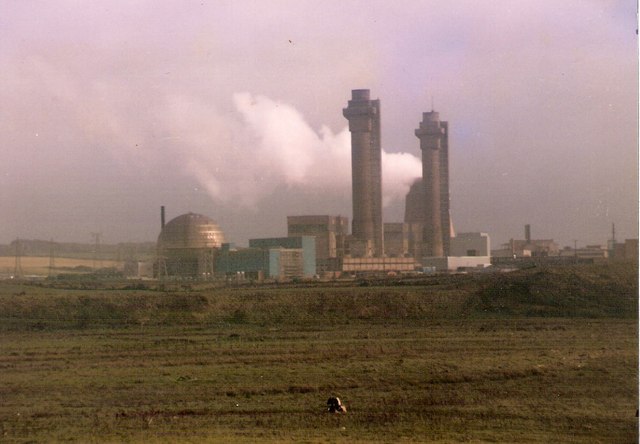
The Windscale Piles (centre and right) in 1985
 
The Windscale fire of 10 October 1957 was the worst nuclear accident in Great Britain's history, ranked in severity at level 5 on the 7-point International Nuclear Event Scale. The two piles had been hurriedly built as part of the British atomic bomb project. Windscale Pile No. 1 was operational in October 1950 followed by Pile No. 2 in June 1951. The accident occurred when the core of the Unit 1 nuclear reactor at Windscale, Cumberland (now Sellafield, Cumbria) caught fire, releasing substantial amounts of radioactive contamination into the surrounding area. Of particular concern at the time was the radioactive isotope iodine-131, which may lead to cancer of the thyroid, and it has been estimated that the incident caused 240 additional cancer cases. No one was evacuated from the surrounding area, but there was concern that milk might be dangerously contaminated. Milk from about 500 km2 of nearby countryside was diluted and destroyed for about a month. A 2010 study of workers directly involved in the cleanup found no significant long term health effects from their involvement.
 
After the Second World War, the British government, not wanting to be left behind as a world power in an emerging arms race, embarked on a programme to build its own atomic bomb as quickly as possible.

The reactors were built in a short time near the tiny village of Seascale, Cumberland, and were known as Windscale Pile 1 and Windscale Pile 2, housed in large, concrete buildings a few hundred feet apart. The reactors were graphite-moderated and air-cooled. Because nuclear fission produces large amounts of heat, it was necessary to cool the reactor cores by blowing air through channels in the graphite. Cool air was taken in by a battery of large fans, hot air was then exhausted out of the back of the core and up the chimney. Filters were added late into construction at the insistence of Sir John Cockcroft and these were housed in galleries at the very top of the discharge stacks. They were deemed unnecessary, a waste of money and time and presented something of an engineering headache, being added very late in construction in large concrete houses at the top of the 400-ft (120 m) chimneys. Due to this, they were known as "Cockcroft's Folly" by workers and engineers. As it was, "Cockcroft's Folly" probably prevented a disaster from becoming a catastrophe.

The reactors were built of a solid graphite core, with horizontal channels through which cartridges of uranium and isotope cartridges could be passed, to expose the isotope cartridges to neutron radiation from the uranium and produce plutonium and radioisotopes, respectively. Fuel and isotopes were fed into the channels in the front of the reactor, the "charge face", and spent fuel was then pushed all the way through the core and out of the back—the "discharge face"—into a water duct for initial cooling prior to retrieval and processing to extract the plutonium.

Unenriched uranium metal in aluminium cartridges with fins to improve cooling was used for the production of plutonium. As this plutonium was intended for weapons purposes, the burn-up of the fuel would have been kept low to reduce production of the heavier plutonium isotopes (240Pu, 241Pu etc.).

The following substances were placed inside metal cartridges and subjected to neutron irradiation to create radioisotopes. Both the target material and some of the product isotopes are listed below. Of these, the polonium-210 release made the most significant contribution to the collective dose on the general population.


  • Lithium-magnesium alloy: tritium
  • Aluminium nitride: carbon-14
  • Potassium chloride: chlorine-36
  • Cobalt: cobalt-60
  • Thulium: thulium-170
  • Thallium: thallium-204
  • Bismuth oxide: polonium-210
  • Thorium: uranium-233
When the reactors were being built, the British, unlike the Americans and the Soviets, had little experience with the behaviour of graphite when it is exposed to neutrons. Hungarian-American physicist Eugene Wigner had discovered that graphite, when bombarded by neutrons, suffers dislocations in its crystalline structure causing a build-up of potential energy. This energy, if allowed to accumulate, could escape spontaneously in a powerful rush of heat. Once commissioned and settled into operations, Windscale Pile 2 experienced a mysterious rise in core temperature, and this was attributed to a sudden Wigner energy release. This worried British scientists, so a means of safely releasing the stored energy was sought. The only viable solution was an annealing process, in which the graphite core was heated to 250°C by the nuclear fuel to allow the displaced carbon atoms to slip back into place in crystalline structure, gradually releasing their stored energy as heat, and causing a uniform release which spread throughout the core. Annealing succeeded in preventing the buildup of Wigner energy, but the monitoring equipment, the reactor itself and all of its ancillaries such as the cooling system were never designed for this. Each annealing cycle was slightly different and progressively more difficult as time went on; many of the later cycles had to be repeated, and higher and higher temperatures were required to start the annealing process. It was also found that some pockets of Wigner energy remained that had not been released on previous occasions.

During the accident, uranium fuel caught fire — not the graphite moderator as is widely assumed. A 2005 inspection showed that graphite damage was localised around burning fuel elements.[9] The annealing phases were not part of the original plan, so thermocouples were placed in positions in the reactor to monitor normal operations, but not to monitor the annealing process. This allowed unknown hot spots to form. The reactor's metallic uranium fuel could easily burn in the presence of oxygen, unlike the uranium dioxide used in modern reactors. The direct venting of the cooling air to the atmosphere meant that any radioactive material released by the core which passed through the filters would be released into the environment.

In order for Britain to engage in a nuclear weapons treaty with the USA, it had to demonstrate that it was a technological equal. The Windscale facility was built to produce plutonium for the first British atom bomb. After the successful explosion of the atom bomb, the USA designed and exploded a thermonuclear bomb requiring tritium. Britain did not have any facility to produce tritium and decided to use the Windscale piles. Tritium can be produced in nuclear reactors by neutron activation of lithium-6. Higher neutron fluxes were needed for this than for producing plutonium and it was decided to reduce the size of the cooling fins (totalling approximately 500,000 individual fins) on the aluminium fuel cartridges, thereby reducing the absorption of neutrons by this aluminium. By pushing the first-generation design of the Windscale facility beyond its intended limits, tritium could be produced at the cost of a reduced safety factor. After a first successful production run of tritium in Pile 1, the heat problem was presumed to be negligible and full-scale production began, but by raising the temperature of the reactor beyond the design specifications, the scientists had altered the normal distribution of heat in the core, causing "hot spots" to develop in Pile 1. These spikes of heat went unnoticed by the scientists because the thermocouples used to measure the core temperatures were positioned based on the original heat distribution design and were not measuring the hottest parts of the reactor, leading to falsely optimistic readings.

On 7 October 1957, operators began an annealing cycle for Windscale Pile 1 by switching the cooling fans to low power and stabilizing the reactor at low power. The next day, to carry out the annealing, the operators increased the power to the reactor. When it appeared that the annealing process was taking place, control rods were lowered back into the core to shut down the reactor, but it soon became apparent that the Wigner energy release was not spreading through the core, but dwindling prematurely. The operators withdrew the control rods again to apply a second nuclear heating and complete the annealing process. Because some thermocouples were not in the hottest parts of the core, the operators were not aware that some areas were considerably hotter than others. This, and the second heating, are suspected of having been the deciding factors behind the fire, although the precise cause remains unknown. The official report suggests that a cartridge of uranium ruptured and oxidised causing further overheating and the fire, but a more recent report suggests that it may have been a magnesium/lithium isotope cartridge. All that was visible on the instruments was a gentle increase in temperature, which was to be expected during the Wigner release.

Early in the morning on 10 October, it was suspected that something unusual was going on. The temperature in the core was supposed to gradually fall as Wigner release ended, but the monitoring equipment showed something more ambiguous and one thermocouple indicated that core temperature was instead rising. In an effort to help cool the pile, the airflow was increased. This fed more oxygen to the fire and lifted radioactive materials up the chimney and into the filter galleries. It was then that workers in the control room realised that the radiation monitoring devices which measured activity at the top of the discharge stack were at full scale reading. In accordance with written guidelines, the foreman declared a site emergency.

Operators tried to examine the pile with a remote scanner but it had jammed. Tom Hughes, second in command to the Reactor Manager, suggested examining the reactor personally and so he and another operator went to the charge face of the reactor, clad in protective gear. A fuel channel inspection plug was taken out close to a thermocouple registering high temperatures and it was then that the operators saw that the fuel was red hot.

"An inspection plug was taken out," said Tom Hughes in a later interview, "and we saw, to our complete horror, four channels of fuel glowing bright cherry red."

There was no doubt that the reactor was now on fire, and had been for almost 48 hours. Reactor Manager Tom Tuohy donned full protective equipment and breathing apparatus and scaled the 80 feet to the top of the reactor building, where he stood atop the reactor lid to examine the rear of the reactor, the discharge face. Here he reported a dull red luminescence visible, lighting up the void between the back of the reactor and the rear containment. Red hot fuel cartridges were glowing in the fuel channels on the discharge face. He returned to the reactor upper containment several times throughout the incident, at the height of which a fierce conflagration was raging from the discharge face and playing on the back of the reinforced concrete containment — concrete whose specifications required that it be kept below a certain temperature to prevent its disintegration and collapse.[11]

Operators were unsure what to do about the fire. First, they tried to blow the flames out by putting the fans onto full power and increasing the cooling, but this fanned the flames. Tom Hughes and his colleague had already created a fire break by ejecting some undamaged fuel cartridges from around the blaze and Tom Tuohy suggested trying to eject some from the heart of the fire, by bludgeoning the melted cartridges through the reactor and into the cooling pond behind it with scaffolding poles. This proved impossible and the fuel rods refused to budge, no matter how much force was applied. The poles were withdrawn with their ends red hot and, once, a pole was returned red hot and dripping with molten metal. Hughes knew this had to be molten irradiated uranium and this caused serious radiation problems on the charge hoist itself.

"It [the exposed fuel channel] was white hot," said Hughes' colleague on the charge hoist with him, "it was just white hot. Nobody, I mean, nobody, can believe how hot it could possibly be."

Next, the operators tried to extinguish the fire using carbon dioxide. The new gas-cooled Calder Hall reactors on the site had just received a delivery of 25 tonnes of liquid carbon dioxide and this was rigged up to the charge face of Windscale Pile 1, but there were problems getting it to the fire in useful quantities. The fire was so hot that it stripped the oxygen from what carbon dioxide could be applied.
"So we got this rigged up," Hughes recounted, "and we had this poor little tube of carbon dioxide and I had absolutely no hope it was going to work."

On the morning of Friday 11 October, when the fire was at its worst, eleven tons of uranium were ablaze. Temperatures were becoming extreme (one thermocouple registered 1,300°C) and the biological shield around the stricken reactor was now in severe danger of collapse. Faced with this crisis, the operators decided to use water. This was risky, as molten metal oxidises in contact with water, stripping oxygen from the water molecules and leaving free hydrogen, which could mix with incoming air and explode, tearing open the weakened containment. Faced with a lack of other options, the operators decided to go ahead with the plan. About a dozen fire hoses were hauled to the charge face of the reactor; their nozzles were cut off and the lines themselves connected to scaffolding poles and fed into fuel channels about a metre above the heart of the fire. Tuohy once again hauled himself atop the reactor shielding and ordered the water to be turned on, listening carefully at the inspection holes for any sign of a hydrogen reaction as the pressure was increased. However the water was unsuccessful in extinguishing the fire, requiring further measures to be taken.
Tom Tuohy then ordered everyone out of the reactor building except himself and the Fire Chief in order to shut off all cooling and ventilating air entering the reactor. Tuohy then climbed up several times and reported watching the flames leaping from the discharge face slowly dying away. During one of the inspections, he found that the inspection plates—which were removed with a metal hook to facilitate viewing of the discharge face of the core—were stuck fast. This, he reported, was due to the fire trying to suck air in from wherever it could.

"I have no doubt it was even sucking air in through the chimney at this point to try and maintain itself," he remarked in an interview.

Finally he managed to pull the inspection plate away and was greeted with the sight of the fire dying away.

"First the flames went, then the flames reduced and the glow began to die down," he described, "I went up to check several times until I was satisfied that the fire was out. I did stand to one side, sort of hopefully," he went on to say, "but if you're staring straight at the core of a shut down reactor you're going to get quite a bit of radiation."

Water was kept flowing through the pile for a further 24 hours until it was completely cold.
The reactor tank itself has remained sealed since the accident and still contains about 15 tons of uranium fuel. It was thought that the remaining fuel could still reignite if disturbed, due to the presence of pyrophoric uranium hydride formed in the original water dousing. Subsequent research, conducted as part of the decommissioning process, has ruled out this possibility. The pile is not scheduled for final decommissioning until 2037.

There was a release of radioactive material that spread across the UK and Europe. The fire released an estimated 740 terabecquerels (20,000 curies) of iodine-131, as well as 22 TBq (594 curies) of caesium-137 and 12,000 TBq (324,000 curies) of xenon-133, among other radionuclides. Later reworking of contamination data has shown national and international contamination may have been higher than previously estimated. For comparison, the 1986 Chernobyl explosion released approximately 1,760,000 TBq of iodine-131; 79,500 TBq caesium-137; 6,500,000 TBq xenon-133; 80,000 TBq strontium-90; and 6100 TBq plutonium, along with about a dozen other radionuclides in large amounts. The Three Mile Island accident in 1979 released 25 times more xenon-135 than Windscale, but much less iodine, caesium and strontium. Preliminary estimates of atmospheric releases by the Fukushima Daiichi nuclear disaster indicate a broadly similar levels to Chernobyl, well above the Windscale fire releases.

Radioactive releases compared (TBq)
MaterialWindscaleChernobylFukushima Daiichi
(atmospheric)
Three Mile Island
Iodine-1317401,760,000130,000much less
Caesium-1372279,50035,000much less
Xenon-13312,0006,500,00017,000,000
Xenon-13525x Windscale
Strontium-9080,000much less
Plutonium6,100
 
The presence of the chimney scrubbers at Windscale was credited with maintaining partial containment and thus minimizing the radioactive content of the smoke that poured from the chimney
Of particular concern at the time was the radioactive isotope iodine-131, which has a half-life of only 8 days but is taken up by the human body and stored in the thyroid. As a result, consumption of iodine-131 often leads to cancer of the thyroid. It had previously been estimated that the incident could have caused 200 additional cancer cases, although in 2007 the figure was revised upwards to an estimated 240.

No one was evacuated from the surrounding area, but there was concern that milk might be dangerously contaminated. Milk from about 500 km2 of nearby countryside was destroyed (diluted a thousandfold and dumped in the Irish Sea) for about a month. A 2010 study of workers directly involved in the cleanup—and thus expected to have seen the highest exposure rates—found no significant long term health effects from their involvement.

The reactor was unsalvageable; where possible, the fuel rods were removed, and the reactor bioshield was sealed and left intact. Approximately 6,700 fire-damaged fuel elements and 1,700 fire-damaged isotope cartridges remain in the pile. The damaged reactor core was still slightly warm as a result of continuing nuclear reactions. Windscale Pile 2, though undamaged by the fire, was considered too unsafe for continued use. It was shut down shortly afterward. No air-cooled reactors have been built since. The final removal of fuel from the damaged reactor was scheduled to begin in 2008 and continue for a further four years.

The Board of Inquiry met under the chairmanship of Sir William Penney from 17–25 October 1957. Its report (the "Penney Report") was submitted to the Chairman of the United Kingdom Atomic Energy Authority and formed the basis of the Government White Paper submitted to Parliament in November 1957. The report itself was released at the Public Record Office in January 1988. In 1989 a revised transcript was released, following work to improve the transcription of the original recordings.

Penney reported on 26 October 1957, 16 days after the fire was extinguished and reached four conclusions:
  • The primary cause of the accident had been the second nuclear heating on 8 October, applied too soon and too rapidly.
  • Steps taken to deal with the accident, once discovered, were "prompt and efficient and displayed considerable devotion to duty on the part of all concerned".
  • Measures taken to deal with the consequences of the accident were adequate and there had been "no immediate damage to health of any of the public or of the workers at Windscale". It was most unlikely that any harmful effects would develop. But the report was very critical of technical and organisational deficiencies.
  • A more detailed technical assessment was needed, leading to organisational changes, clearer responsibilities for health and safety, and better definition of radiation dose limits.
Those who had been directly involved in the events were heartened by Penney's conclusion that the steps taken had been "prompt and efficient" and had "displayed considerable devotion to duty". Some felt, nevertheless, that the determination and courage shown by Thomas Tuohy, as well as the critical role he played in the aversion of complete disaster, had not been fully recognised. Tuohy died on 12 March 2008 having never received any kind of public recognition for his efforts.

The Windscale site was decontaminated and is still in use. Part of the site was later renamed Sellafield after being transferred to BNFL; the whole site is now owned by the Nuclear Decommissioning Authority.

The release of radiation by the Windscale fire was greatly exceeded by the Chernobyl disaster in 1986, but the fire has been described as the worst reactor accident until Three Mile Island in 1979. Epidemiological estimates put the number of additional cancers caused by the Three Mile Island accident at not more than one; only Chernobyl produced immediate casualties.

Three Mile Island was a civilian reactor, and Chernobyl primarily so, both being used for electrical power production. In contrast Windscale was for purely military purposes.

The reactors at Three Mile Island, unlike those at Windscale and Chernobyl, were in buildings designed to contain radioactive materials released by a reactor accident.

Other military reactors have produced immediate, known casualties such as the 1961 incident at the SL-1 plant in Idaho which killed three operators, or the criticality accident which killed Louis Slotin at the Los Alamos National Laboratory in 1946.

The accident at Windscale was also contemporary to the Kyshtym disaster, a more serious accident which happened on 29 September 1957 at the Mayak plant in the Soviet Union, when the failure of the cooling system for a tank storing tens of thousands of tons of dissolved nuclear waste resulted in a non-nuclear explosion.

In 1999, the BBC produced an educational documentary about the fire as a 30-minute episode of "Disaster" (Series 3) entitled The Windscale Fire. It subsequently was released on DVD.

In 2007, the BBC produced another documentary about the accident entitled "Windscale: Britain’s Biggest Nuclear Disaster", which investigates the history of the first British nuclear facility and its role in the development of nuclear weapons. The documentary features interviews with key scientists and plant operators, such as Tom Tuohy, who was the deputy general manager of Windscale. The documentary suggests that the Windscale fire of 1957 - the first fire in any nuclear facility - was caused by the relaxation of safety measures, as a result of pressure from the British government to quickly produce fissile materials for nuclear weapons.


Saturday, December 29, 2012

Who Killed Noel Lemass?

In a post on the website Politics.ie entitled "Who Killed Noel Lemass?" from January 2011, with the moniker Turdsl states the following:

I have mentioned this many times down through the years to Fine Gael people, they were always the best at condemning Adams and McGuinness and the IRA as cold blooded killers.

Mention the Killing of Noel Lemass and the excuses varied and the subject would change. Some of the answers were just unbelievable; it was one of the most savage killings ever.

Fine Gael never did want to hear about it, One point must be said Sean Lemass always treated the opposition with dignity, I am sure he did not find it easy at times on account of that episode in the countries history alone.
 
Originally Posted by El Libre View Post
In the Irish Mail on Sunday of 3rd October, Dermot Bolger's review of Damian Corless's Irish Hospitals Sweeptstakes contains some remarkable claims. Joe McGrath, one of the leading lights of the Sweepstakes racket, as is well known, is also stated to have been 'Michael Collins's former enforcer and torturer'. More than that, Bolger alleges that Seán Lemass's brother Noel 'was tortured and murdered by McGrath'.

The murder of Noel Lemass is notable for the fact that it took place after the end of the Civil War, he being abducted in July 1923 and his dismembered body located at the Featherbed in the Dublin Mountains in October (the spot is marked by a monument). While it is accepted that Free State forces were to blame, I have never seen anyone mentioned by name as the killer, and although McGrath might have turned a blind eye, one wonders if he is being unfairly accused? Ulick O'Connor wrote in the Sunday Indo in 2002 that Noel Lemass was killed because of the mistaken belief that he had been involved in the murder of Sean Hales.

Those were indeed terrible times, and it is suspected that the Military Archives in Cathal Brugha Barracks may still hold some surviving secret files that just might throw a little more light on these officially sanctioned murders. You will still find the odd 'Blueshirt' justifying the killings today, in the cause of preserving order and democracy. Of course the Republicans killed ruthlessly as well and have their apologists, but they could not match the ferocity and resources of their former colleagues and friends in the Free State government.


Members of the Fifteenth Dáil - Noel Thomas Lemass Jr

Noel Thomas Lemass (14 February 1929 – 13 April 1976) was an Irish Fianna Fáil politician and Teachta Dála (TD) for Dublin South–West from 1956 until 1976.

Born in Dublin in 1929, Lemass was the son of Seán Lemass, a Fianna Fáil TD, and Kathleen Lemass (née Hughes). He was named after his uncle, a victim of the Irish Civil War in the early 1920s. Lemass was educated at Catholic University School, Leeson Street in Dublin and later at Newbridge College in County Kildare. He didn't attend university, against his father's wishes, instead undertaking business training and later becoming an executive member and branch secretary of the Irish Commercial Traveller's Association.

Lemass followed his father into politics in 1955 when he was elected to Dublin City Council. He was elected to Dáil Éireann in a by-election in Dublin South–West the following year. In winning that by-election, Lemass delivered a blow to the ruling Fine Gael party whose TD had held the seat for a number of years.

Lemass had to wait until his father retired as Taoiseach for political preferment. In spite of this he was active in a number of political councils and other groupings. From 1966 to 1968 he was a member of the Consultative Assembly of the Council of Europe. He was also a member of the Irish-British Parliamentary Group and the Irish-French Parliamentary Group.

Lemass was appointed Parliamentary Secretary to the Minister for Finance, serving from 1969 until 1973 and holding responsibility for the Board of Works. In his first year at the Department, he served under his brother-in-law, Charles Haughey, and later under George Colley.

When Fianna Fáil lost power in 1973 Lemass was named on the front branch as spokesperson for physical planning and the environment. He held that position until January 1975 when he was dropped from the front bench.

Lemass's political career, a career in which he was invariably judged in comparison to his father, was cut short when he died suddenly in 1976.

Lemass married Eileen Delaney in 1950. The couple had four children. Lemass's wife became involved in politics herself when she became a member of Dublin Corporation. She also entered the Dáil following the death of her husband.

Members of the Fifteenth Dáil - Martin Medlar

Martin Medlar (4 December 1899 – 4 June 1965) was an Irish Fianna Fáil politician. A farmer by profession, he was elected to Dáil Éireann as a Fianna Fáil Teachta Dála (TD) for the Carlow–Kilkenny constituency at the 1956 by-election caused by the death of Thomas Walsh of Fianna Fáil. He was re-elected at the 1957 and 1961 general elections. He lost his seat at the 1965 general election.